


Who Is a Good Candidate for Endoscopic Spine Surgery?
Minimally invasive endoscopic spine surgery suits patients with a clearly diagnosed nerve compression problem that has not responded to six to twelve weeks of conservative care. Think herniated disc or spinal stenosis with symptoms radiating into the limbs. Stable...
When Does a Herniated Disc Actually Need Surgery?
Most herniated discs don’t end up on an operating table. Given six to twelve weeks and proper conservative care, physical therapy, anti-inflammatories, and some activity adjustment, many of them settle without any surgical help. Surgery enters the picture when...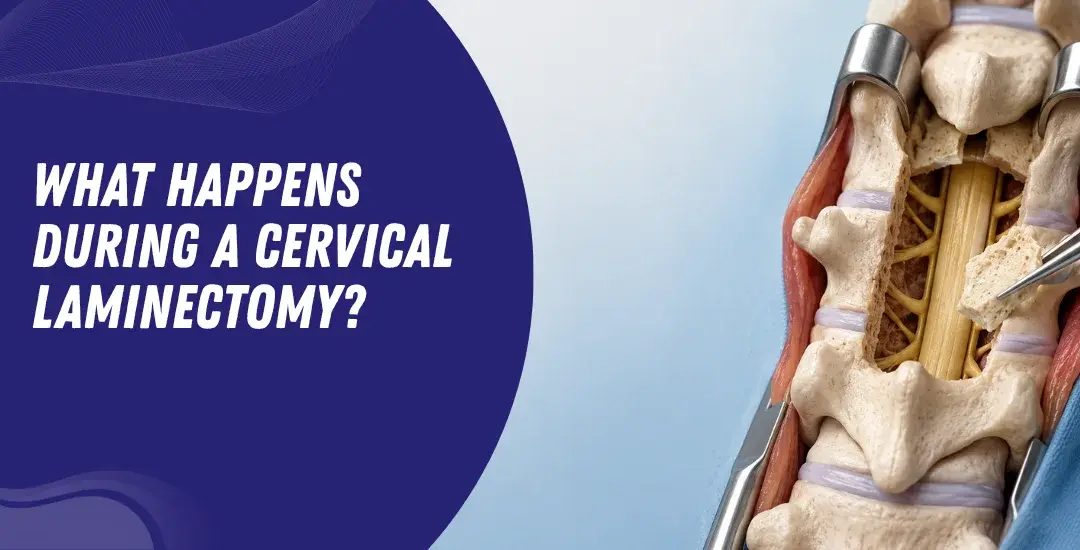
What Happens During a Cervical Laminectomy?
Each vertebra in the neck has a bony segment at the back called the lamina. When it starts narrowing the spinal canal, it presses on the cord or nerve roots and causes arm weakness, numbness, and grip problems. A surgical laminectomy takes that section out to clear...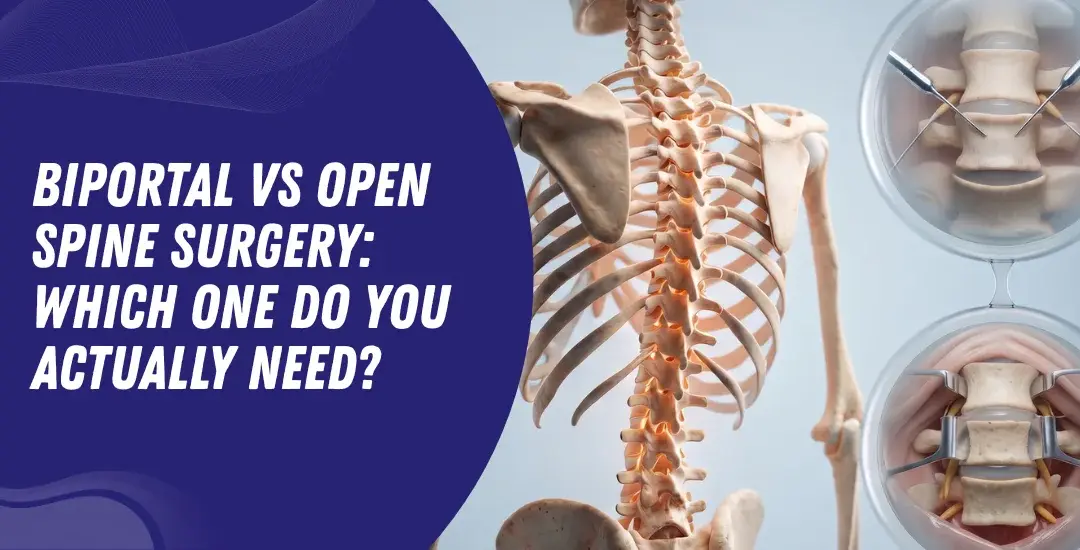
Biportal vs Open Spine Surgery: Which One Do You Actually Need?
Open spine surgery is the conventional route: one larger incision that gives the surgeon a direct, unaided view of the spine. Biportal endoscopic surgery, also called Unilateral Biportal Endoscopy (UBE), takes a different path. It uses two tiny incisions, usually...