Unilateral Biportal Endoscopic (UBE) Spine Surgery
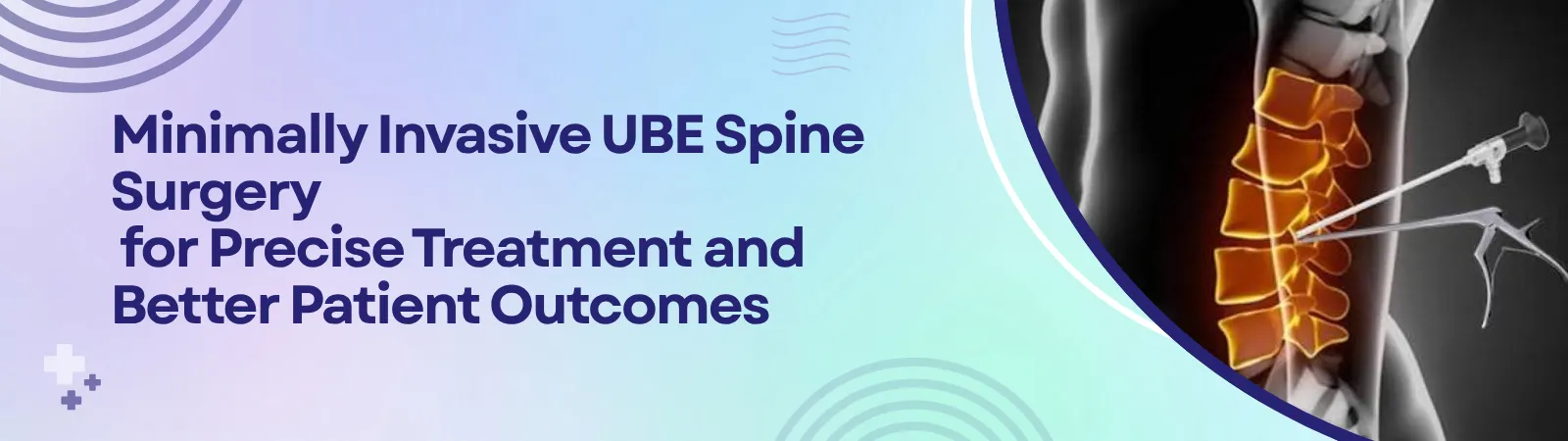
Persistent back pain, leg pain that travels below the knee, or a creeping numbness and weakness usually point to a nerve being compressed inside the spinal canal. Unilateral Biportal Endoscopic (UBE) Spine Surgery is a minimally invasive technique that treats this compression through two small keyhole incisions on the same side of the spine, rather than one long open cut. One portal holds a continuous high-definition endoscope so the surgeon can see the nerve throughout the procedure, while the second portal is used to pass fine instruments that remove the disc material or bone causing the compression.
“UBE gives us a live, magnified view of the nerve at every step, so we remove exactly what is pressing on it and nothing more. Patients feel the difference in how little the muscle is disturbed,” states Dr. Arvind Umarani.
Dr. Arvind Umarani is an experienced orthopaedic spine surgeon with focused expertise in minimally invasive and endoscopic spine techniques. He treats lumbar disc herniation, spinal canal narrowing, and degenerative spine conditions using unilateral biportal endoscopy wherever it is clinically the better fit.
Causes and Symptoms Behind Conditions Treated with UBE Spine Surgery
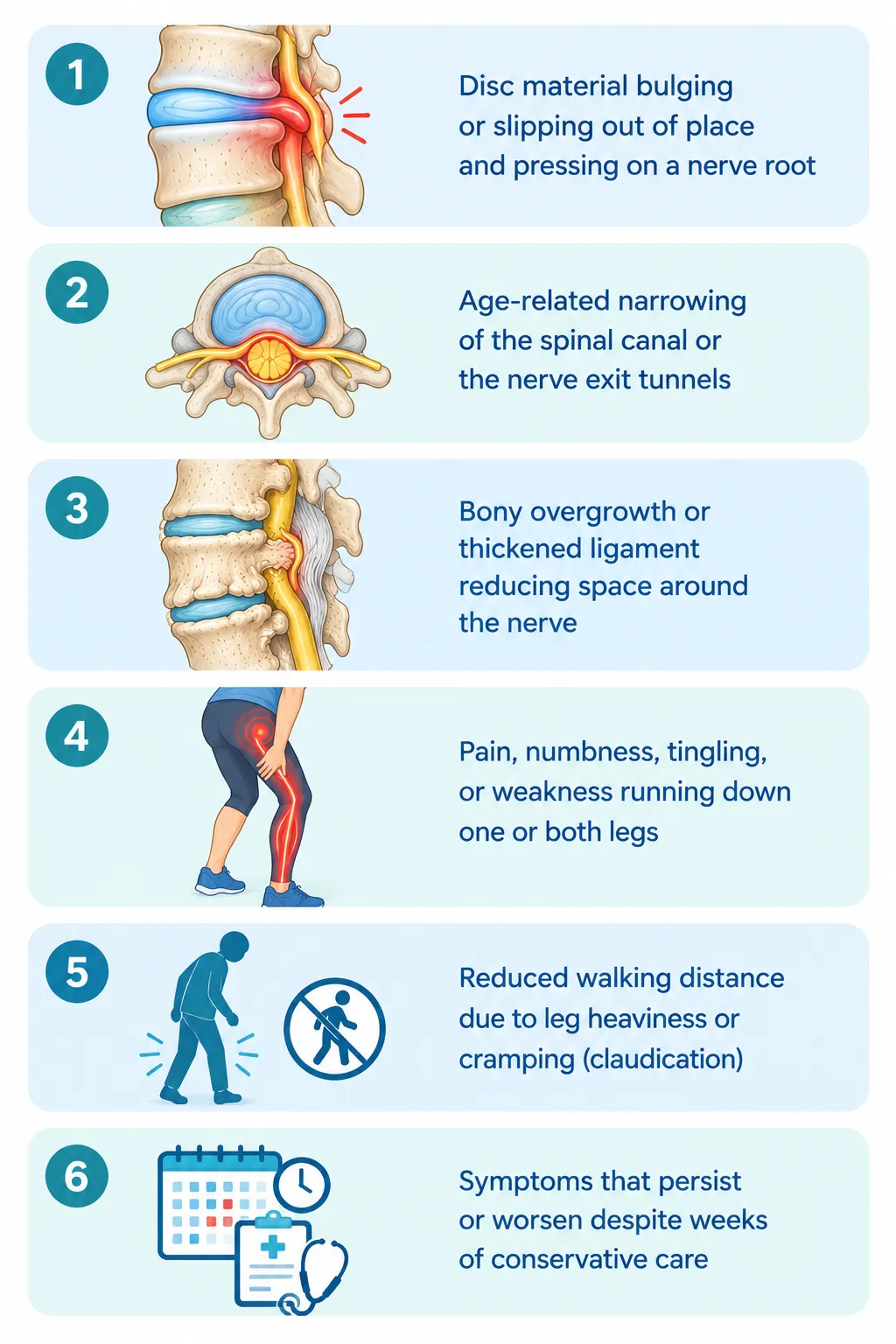
UBE spine surgery is usually considered once nerve compression in the spine produces pain or neurological symptoms that have not eased with rest, medication, or physiotherapy. Common causes and symptoms include:
Back or leg symptoms that interfere with daily routines, sleep, or work are worth getting evaluated early, before the nerve compression becomes more established.
Conditions Treated with UBE Spine Surgery
Lumbar Disc Herniation
A slipped or bulging disc pressing on a nerve root, causing leg pain, numbness, or weakness.
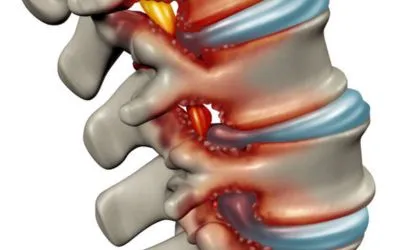
Lumbar Spinal Stenosis
Narrowing of the spinal canal that compresses the nerves as they travel through it.
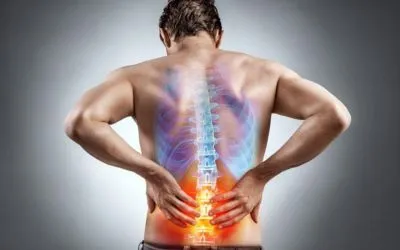
Lumbar Foraminal Stenosis
Narrowing of the nerve exit tunnel, often producing sharply localised leg pain.
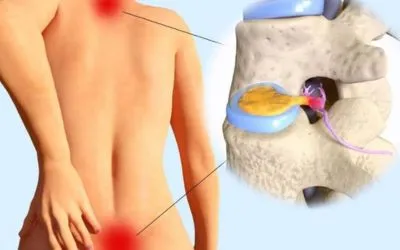
Recurrent Disc Herniation
Disc material re-herniating at a level that has already been operated on.
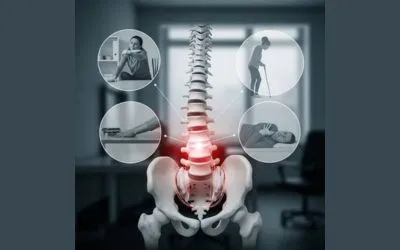
Degenerative Spondylolisthesis (select cases)
Mild vertebral slippage where decompression alone can relieve symptoms.
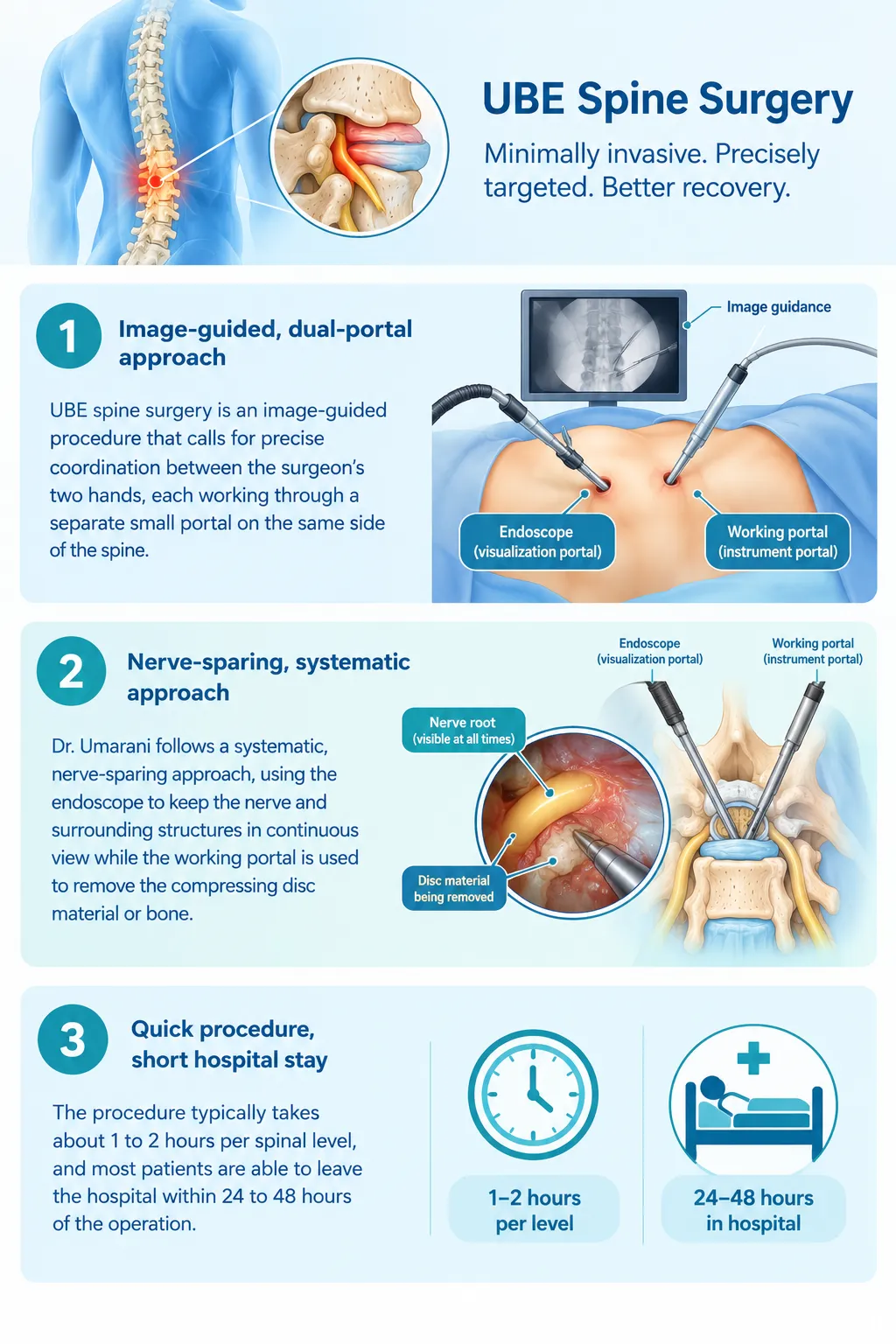
How UBE Spine Surgery is Performed by Dr. Arvind Umarani
Wondering whether your sciatica or nerve weakness qualifies for UBE? Here is how Dr. Arvind Umarani decides who is actually a good fit.
Ideal Candidate for UBE Spine Surgery
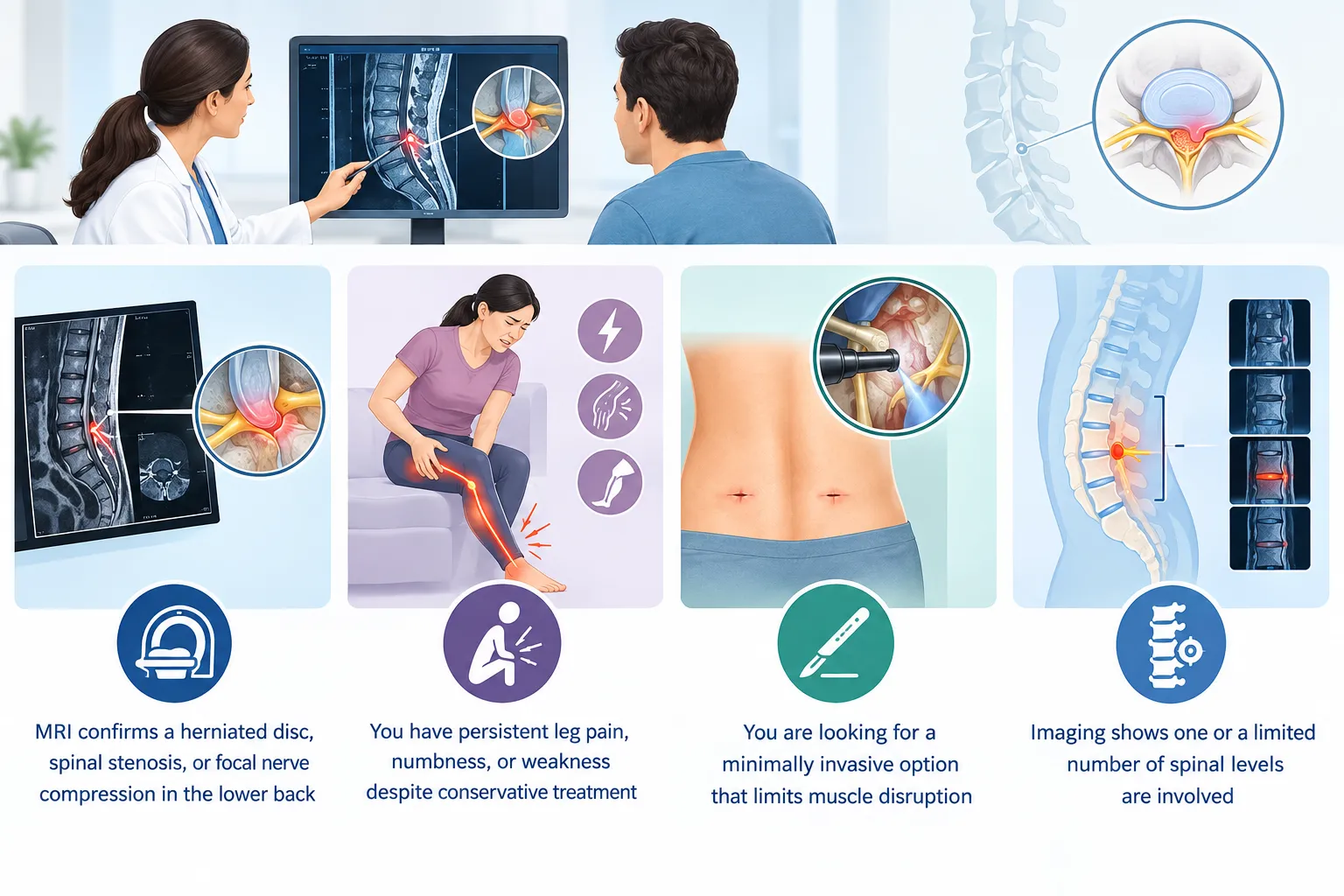
You may be a candidate for UBE spine surgery if:
A detailed clinical assessment combined with imaging review is what ultimately confirms whether UBE is the right course of treatment for you.
Decompressing the nerve is only half the outcome — the smaller footprint of UBE is what lets recovery happen faster than it typically does after open surgery.
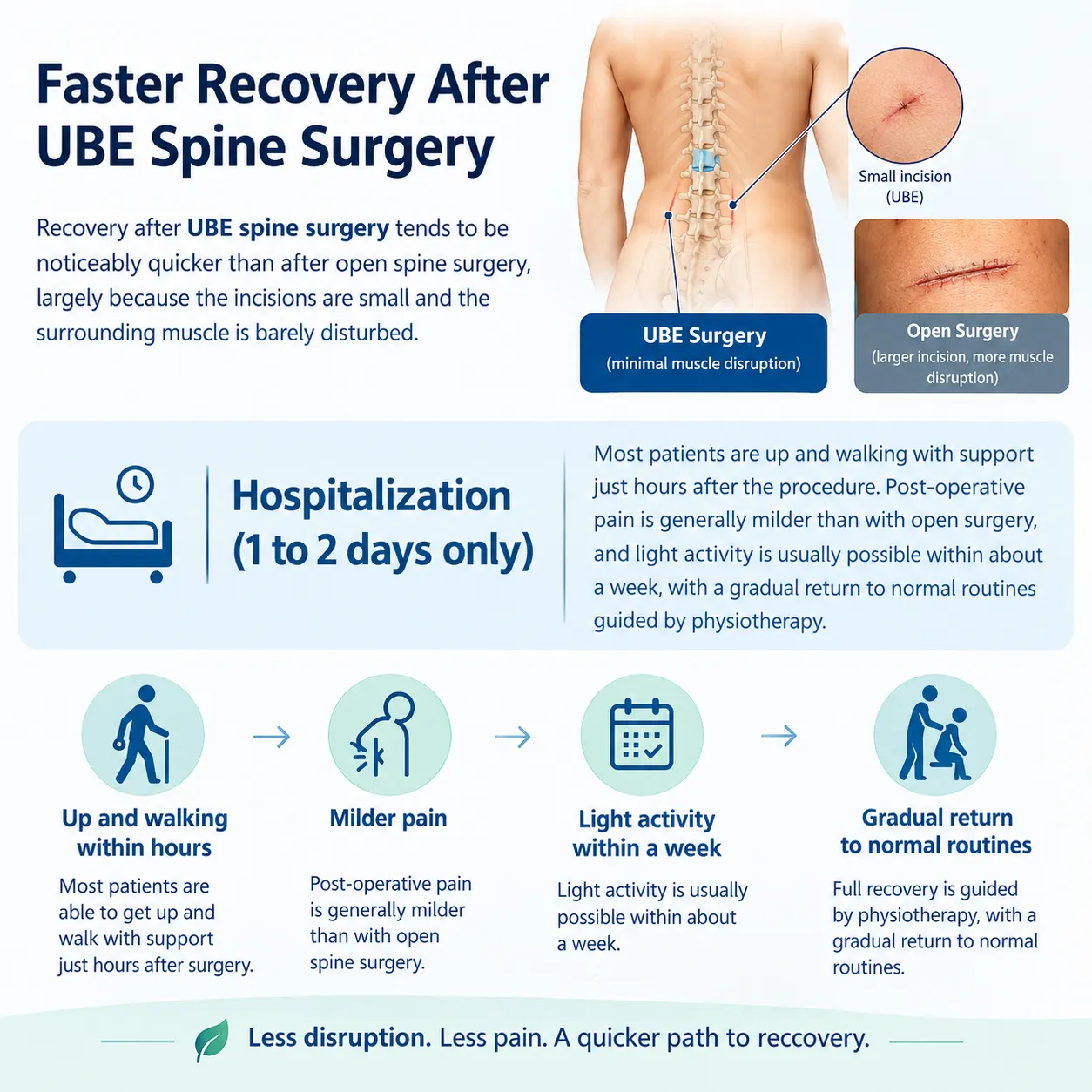
Recovery After UBE Spine Surgery
Because UBE places the surgeon in close proximity to delicate neural structures within a narrow field of view, there is very little margin for error — which is why patients place their trust in Dr. Umarani’s experience with this technique.
Why Choose Dr. Arvind Umarani for UBE Spine Surgery?

Focused Endoscopic Expertise
Globally Trained Skill Set
Customised surgical approach
Visualisation for precision
Patient-Centred Counselling
Faster Recovery Focus
Begin with a focused consultation and an evidence-based plan with Dr. Arvind Umarani.
Frequently Asked Questions
What is the basic difference between UBE spine surgery and traditional open spine surgery?
Is UBE surgery for Disk/Nerve compression right for you?
The time to recovery from UBE spine surgery is about one week in hospital and between three to six months in total to feel back to normal.
How long does it take to recover from UBE spine surgery?
Is general anaesthesia necessary for UBE spine surgery?
Can the problem recur after UBE spine surgery?
Disclaimer: The information shared in this content is for educational purposes and not for promotional use.