
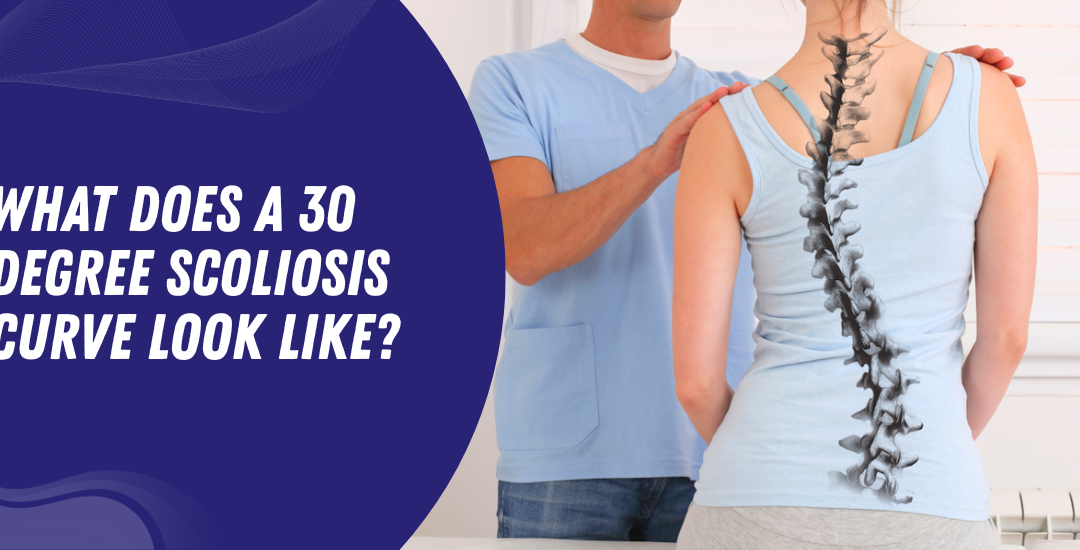
A 30 degree scoliosis curve occupies a clinically significant middle ground that often creates uncertainty for patients and parents alike. It is pronounced enough to alter posture, trunk alignment, and body symmetry, yet it does not automatically warrant surgical correction. Dr. Arvind Umarani, an esteemed orthopaedic spine surgeon, explains that a precise understanding of how this curve appears, how it is measured, and what it signifies for long-term spinal health is essential for making informed decisions regarding monitoring, conservative management, or further intervention.
Understanding the 30 Degree Cobb Angle
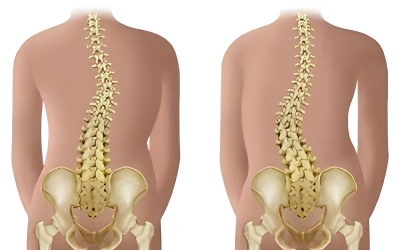
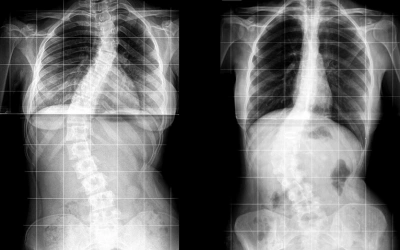
The severity of a scoliotic curve is quantified using the Cobb angle, a standardised measurement derived from a full-length, weight-bearing X-ray of the spine. To calculate this angle, the radiologist or surgeon identifies the most tilted vertebra above the apex of the curve and the most tilted vertebra below it. Lines are drawn along the upper and lower endplates of these vertebrae, perpendicular lines are extended from each, and the angle formed at their intersection constitutes the Cobb angle.
A curve measuring 30 degrees is classified as a moderate scoliotic curve within accepted clinical staging systems.
It is more advanced than a mild curve, generally defined as below 25 degrees, but has not yet reached the 45 to 50 degree threshold at which surgical correction is typically considered. Because moderate curves sit at this inflection point, accurate measurement and consistent follow-up imaging are essential to determine whether the curve is stable or progressing.
It is worth noting that the Cobb angle alone does not capture the full clinical picture. Curve location (thoracic, thoracolumbar, or lumbar), rotational deformity, skeletal maturity, and the flexibility of the spine on bending films all influence how a 30 degree curve behaves over time and how it should be managed.
What a 30 Degree Curve Looks Like from the Outside?
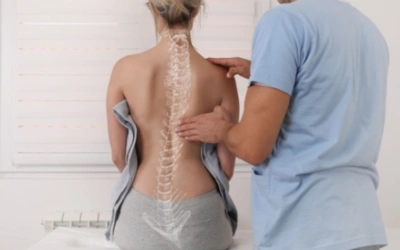
Although classified as moderate, a 30 degree curve is, in most cases, visibly apparent on physical examination, particularly when the individual bends forward at the waist or is examined without a shirt. The following features are commonly observed:
- Asymmetry in shoulder height, with one shoulder positioned noticeably higher than the other
- A visible tilt or unevenness along the waistline, sometimes described as one side appearing shorter
- Asymmetry of the hips, with one side appearing more prominent or elevated
- A rib hump or paraspinal muscle prominence on one side of the back, most evident during the Adam’s forward bend test
- Uneven hang or fit of clothing across the shoulders, waist, or hemline
- A perceptible lean or shift of the trunk to one side relative to the pelvis
- Asymmetric positioning of the shoulder blades, with one appearing more prominent than the other
In children and adolescents with adolescent idiopathic scoliosis, these changes typically develop gradually over months and are frequently first identified by a parent, teacher, physical education instructor, or during a routine school screening, rather than by the affected individual. In adults, particularly those with degenerative scoliosis, postural asymmetry may become more apparent over time as disc height decreases and paraspinal muscle support declines.
Clinical Symptoms Associated with a 30 Degree Curve
A curve of this magnitude does not invariably produce pain, particularly in younger patients whose spinal column retains a greater degree of flexibility. Nonetheless, a subset of patients report the following:
- Mild to moderate lower or mid-back discomfort following prolonged standing, sitting, or physical activity
- Fatigue and tightness in the paraspinal musculature resulting from chronic postural compensation
- Noticeable postural asymmetry observed in mirrors, photographs, or by family members
- Psychosocial impact, including self-consciousness regarding body image, particularly among adolescents
- Mild restriction in trunk rotation or forward flexion in some cases
In adults, and particularly in those with degenerative or adult-onset scoliosis, a 30 degree curve is more frequently associated with stiffness, aching, or intermittent radicular symptoms, as the surrounding intervertebral discs and facet joints possess reduced capacity to compensate for the structural imbalance. Nerve-related symptoms such as numbness, tingling, or radiating leg pain, while less common at this magnitude, should always be evaluated promptly.
Is a 30 Degree Curve Mild, Moderate, or Severe?
Scoliotic curves are broadly classified according to Cobb angle as follows:
- Mild: Less than 25 degrees, generally managed through periodic observation and clinical review
- Moderate: 25 to 40 degrees, frequently managed with bracing, structured physiotherapy, and closer radiographic monitoring
- Severe: Greater than 45 to 50 degrees, at which point surgical correction is typically considered
A 30 degree curve is firmly situated within the moderate category. Curves in this range warrant closer surveillance than mild curves because they carry a comparatively higher likelihood of progression, particularly in skeletally immature patients who have substantial growth remaining. The Risser sign, menstrual history in female patients, and other markers of skeletal maturity are often used alongside the Cobb angle to estimate the probability and rate of further progression.
Diagnostic Evaluation of a 30 Degree Curve
A thorough evaluation extends beyond a single X-ray reading. A comprehensive assessment typically includes:
- Standing full-spine X-rays (posteroanterior and lateral views) to establish the baseline Cobb angle and overall spinal alignment
- Side-bending or traction films to assess curve flexibility, which helps differentiate a structural curve from a compensatory one
- Assessment of skeletal maturity, including growth potential in paediatric and adolescent patients
- A detailed physical examination, including the Adam’s forward bend test and neurological screening
- MRI, when nerve-related symptoms, an atypical curve pattern, or congenital features are present, to rule out underlying spinal cord or vertebral abnormalities
This information collectively determines whether a 30 degree curve should be observed, braced, or referred for more active management, rather than relying on the Cobb angle in isolation.
Management Options for a 30 Degree Curve
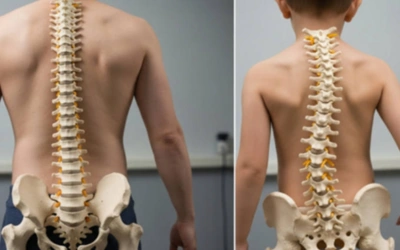
Treatment for a 30 degree curve is individualised and depends on several factors beyond the numerical measurement, including the patient’s age, remaining growth potential, the anatomical location of the curve, curve flexibility, and the rate of progression demonstrated on serial X-rays. Established management approaches include:
- Observation: Periodic clinical review and X-rays, typically every four to six months in growing patients, to track any change in the curve
2. Bracing: Recommended for skeletally immature children and adolescents with documented progression, with the aim of preventing further curve advancement during the remaining growth period
3. Physiotherapy and scoliosis-specific exercise programmes: Structured, evidence-based exercise protocols to support postural control, core strength, and symptomatic comfort
4. Surgical consultation: Considered when the curve demonstrates rapid progression, approaches the 40 to 45 degree range despite appropriate conservative management, or is accompanied by significant pain or neurological symptoms
Most patients who come showing a stable, non-progressing 30-degree curve should not go under the scalpel as the surgical procedure. It is not only the Cobb angle by which the decision is made, but also the course of the change in the curve with regular follow-up consultations and a decision has to be made since a progressing curve needs a very dissimilar kind of management and a curve that has not progressed at all over a long time period may need different types of interventions.
When Should You Consult a Spine Specialist?
A 30 degree curve represents a reasonable and prudent indication to consult a qualified spine specialist, particularly in the presence of any of the following:
- Documented curve progression compared with a previous X-ray
- New onset or worsening back pain
- A child or adolescent who remains in an active phase of skeletal growth
- Visible changes in posture, shoulder height, or waistline over a relatively short interval
- Neurological symptoms such as numbness, tingling, weakness, or radiating leg pain
- Uncertainty regarding whether a previously diagnosed curve has changed in magnitude
Early accurate detection allows doctors specialists to confirm a Cobb angle accurately, assess spinal flexibility, and skeletal maturation which can help a doctor decide a monitoring program, conservative treatment, surgical treatment of scoliosis according to the specific patient and not only based on the value of the curve.
Concerned about a 30 degree scoliosis curve? Consult Dr. Arvind Umarani for a precise diagnostic assessment and a clinically appropriate management plan.
Frequently Asked Questions
1. Is a 30 degree scoliosis curve considered serious?
A 30 degree curve is classified as moderate rather than severe. It does not typically require surgical intervention, but it does warrant regular clinical and radiographic monitoring, particularly in patients who have not yet reached skeletal maturity, as the risk of progression is meaningfully higher within this range.
2. Can a 30 degree curve progress further over time?
Yes. Progression is more likely in adolescents who are still growing, given the correlation between remaining growth potential and curve advancement, and in adults with degenerative changes affecting the discs and facet joints. Serial X-rays at appropriate intervals are used to establish whether the curve is stable or advancing, and at what rate.
3. Will bracing correct a 30 degree curve?
Bracing is not intended to reduce or straighten an existing curve. Its clinical purpose is to reduce the likelihood of further progression in skeletally immature patients during the remaining period of growth. Once growth is complete, the role of bracing in altering curve magnitude is limited.
4. Is a 30 degree curve visible to others?
In most cases, yes. Findings such as uneven shoulder height, a tilted waistline, hip asymmetry, or a rib hump on forward bending are commonly observed on examination, although the degree of visible asymmetry varies according to individual body build, curve location, and rotational component.
5. Is a second opinion advisable for a 30 degree curve?
A second opinion is a reasonable course of action, particularly when surgery is being discussed, when there is ambiguity regarding whether the curve is progressing, or when the recommended management plan is not clearly explained. Given the moderate classification of a 30 degree curve, careful clinical judgement is required to determine the appropriate course of action.
6. Does a 30 degree curve affect lung or heart function?
At 30 degrees, clinically significant effects on cardiopulmonary function are uncommon and are more typically associated with severe thoracic curves, generally in excess of 60 to 70 degrees. Nonetheless, curve location and any associated rotational deformity are assessed as part of a comprehensive evaluation.
7. How frequently should a 30 degree curve be monitored?
Monitoring intervals are individualised, but growing patients with a moderate curve are typically reviewed with clinical examination and X-rays every four to six months, while skeletally mature adults may be reviewed at longer intervals unless symptoms or progression are noted.
Disclaimer: The information shared in this content is for educational purposes and not for promotional use.
