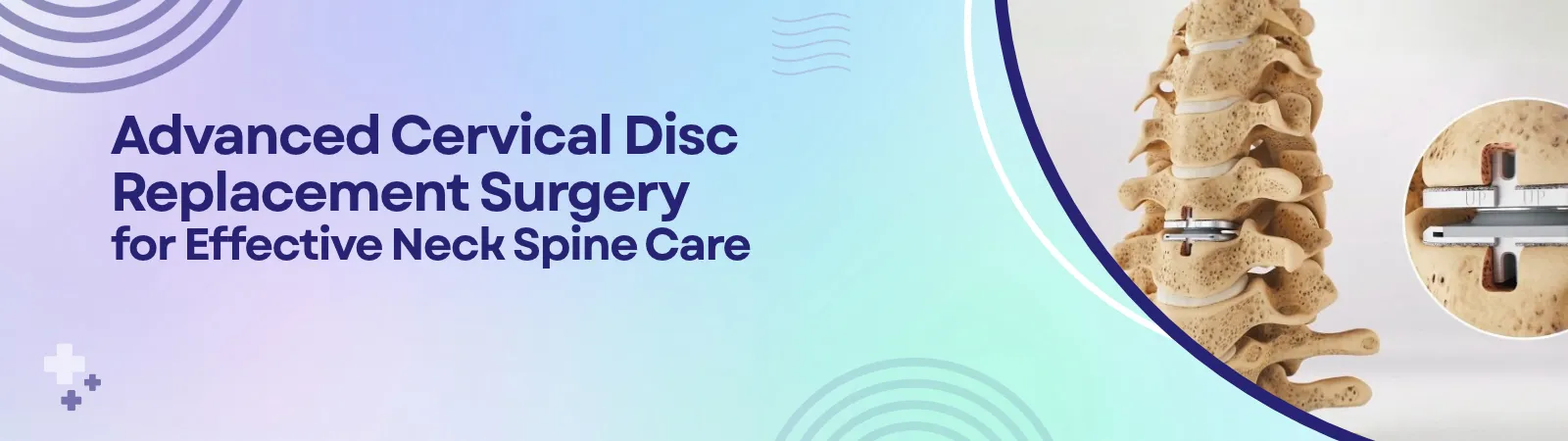
Cervical Disc Replacement Surgery
Neck pain that travels into the shoulder or arm, along with numbness, tingling, or weakness in the hand, often points to a cervical disc pressing on a nerve or the spinal cord. Cervical Disc Replacement (CDR), also called cervical arthroplasty, is a motion-preserving surgical procedure. The damaged disc is removed through a small incision at the front of the neck, the pressure on the nerve or cord is relieved, and an artificial disc is placed in the space. This lets the segment keep moving naturally instead of being fused.
“It is important to select the right patient because replacement of the disc instead of fusion gives the patient the opportunity to recover from nerve compression without compromising motion at the level,” says Dr. Arvind Umarani.
Dr. Arvind Umarani is an orthopaedic spine surgeon with focused expertise in cervical and lumbar spine conditions. He treats cervical disc herniation, cervical spinal stenosis and degenerative neck conditions through anterior, motion-preserving, minimally invasive and endoscopic methods, as appropriate for individual patients.
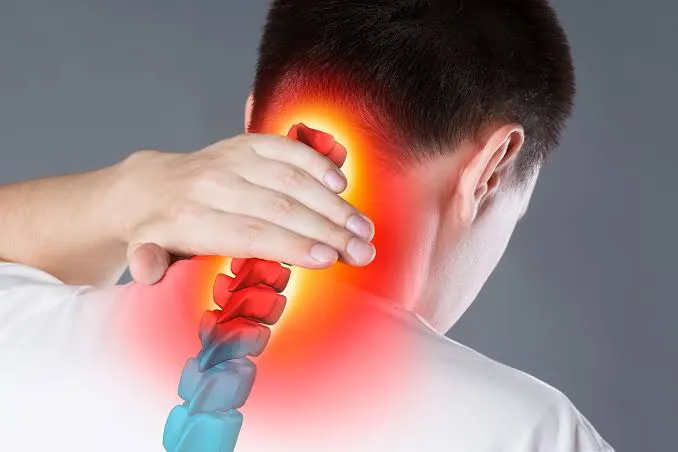
If the compression is from one or two cervical disk levels, and there are no other problems in the rest of the spine, disc replacement is a way to provide decompression with the retention of motion.
Causes and Symptoms of Conditions Requiring Cervical Disc Replacement
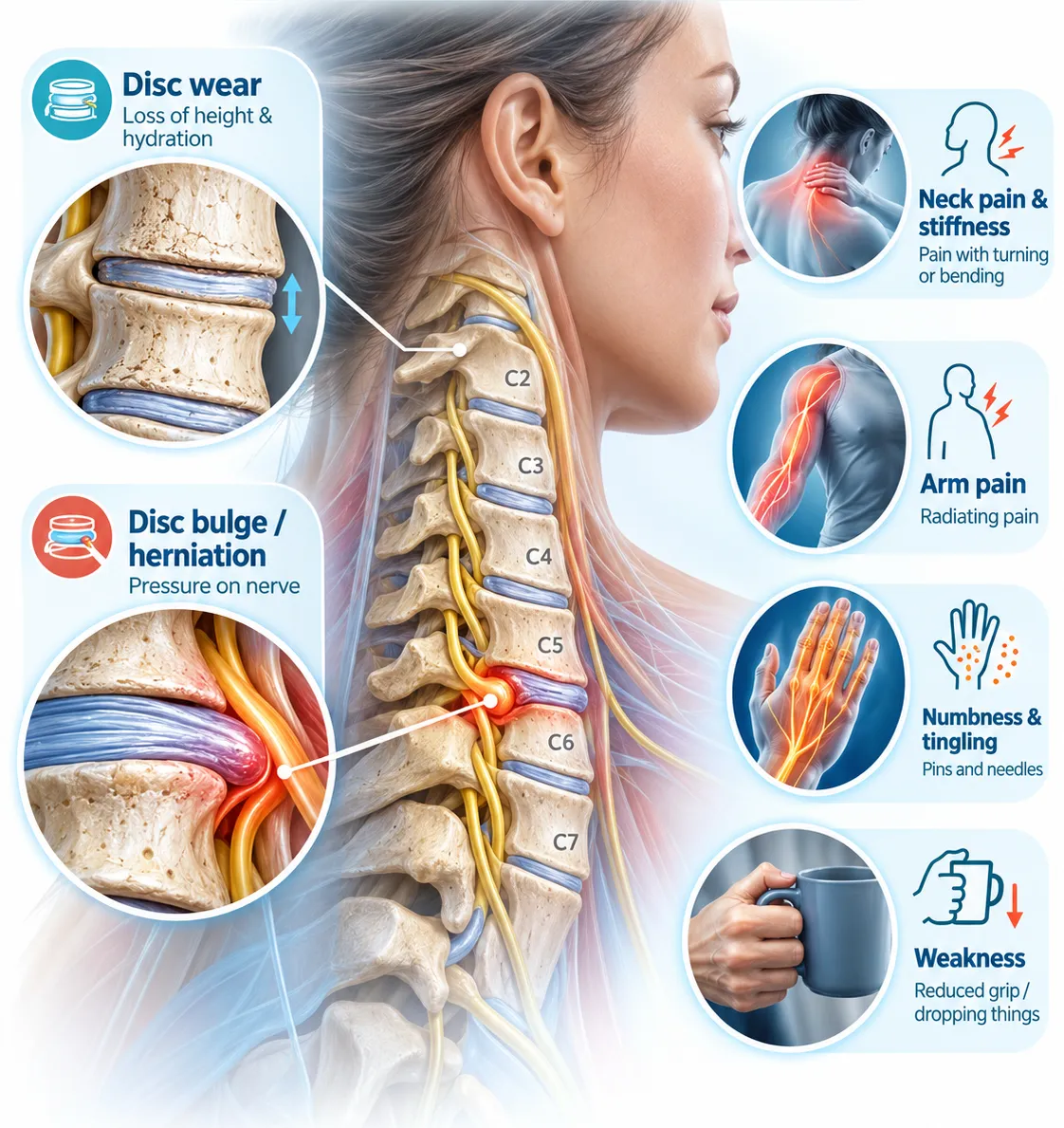
The decision to undergo cervical disc replacement typically will be made when a disc problem is causing a nerve root or spinal cord problem and conservative therapy has failed. The most common causes and symptoms are:
- Narrowing of the space for getting out of the disc due to age-related disc wear.
- Disc bulge or disc herniation: Bulging or leaking of disc into the spinal cord or nerve root.
- Neck pain (radiculopathy): Sudden, burning or shooting pain from the neck into the shoulder, arm or fingers.
- Pins-and-needles sensations in the arm or hand; sometimes in a particular pattern.
- Difficulty lifting things, weakness, or dropping things, loss of grip strength.
- Neck pain and stiffness: Stiffness and pain in the neck that makes it hard to turn or bend it.
If symptoms do not resolve, or worsen or start to cause problems with grip, balance or coordination, they should be assessed as quickly as possible as the involvement of the spinal cord can progress if ignored.
Conditions Treated with Cervical Disc Replacement
When the disc is the primary source of compression, and maintaining motion at that level is important, cervical disc replacement may be indicated. Conditions treated include:
- Cervical Disc Herniation: When a disc slips or bulges against a nerve root and leads to pain, numbness or weakness in the arm.
- Cervical Radiculopathy: Neck pain, numbness or weakness following a certain pattern of movement in the arm due to nerve root compression.
- Wear related disc collapse at a single and/or two levels, which make the nerve exit tunnels smaller.
- Soft-Disc Cervical Myelopathy: Spinal cord compression due to a disc (after careful review on imaging).
- Adjacent Segment Disease: Degeneration next to a previously fused level, in carefully selected cases.
- Failed Conservative Treatment: The symptoms have not improved with treatment, physiotherapy or injections.
The MRI, X-rays and a thorough neurological exam will help to identify the level involved and whether disc replacement is appropriate.
Struggling with neck pain radiating into your arm or hand? Find out if cervical disc replacement is the right option for you.
How Cervical Disc Replacement is Performed
The operation takes place under general anaesthetic, and usually is performed in this order:
- A small cut is made in the front of the neck, and the muscles, windpipe, and food pipe are retracted to reach the spine.
- The offending disc is removed completely, with any bony spurs or disc pieces that are pinching the nerve or spinal cord.
- The disc space is entered and an appropriately-sized artificial disc is inserted with the aid of x-ray guidance.
- The implant is placed in the centre of the disc space and fixed in place so it moves with the neck.
- Position is verified on imaging, incision is closed.
The procedure generally lasts approximately one to two hours for each level.
Ideal Candidate for Cervical Disc Replacement
You may be a candidate for cervical disc replacement if:
- You have arm pain, numbness, or weakness caused by a disc problem at one or two levels.
- Symptoms have not improved after several weeks of medication, physiotherapy, or injections.
- Your MRI shows disc compression that matches your symptoms.
- Your cervical spine is stable and the facet joints are in reasonably good condition.
- Your bone density is adequate, and the neck has good natural motion at that level.
Disc replacement is generally not suitable where there is spinal instability, significant facet joint arthritis, severe bone loss (osteoporosis), active infection, advanced multi-level degeneration, or marked deformity. In such cases, ACDF or another approach may be the better option.
A thorough clinical and imaging assessment is what confirms whether disc replacement, rather than fusion or an endoscopic alternative, is appropriate.

Recovery After Cervical Disc Replacement
The recovery is usually good and not complicated as the anterior approach does not involve cutting through the large muscle groups of the neck.
Hospitalization is to be used for 1-2 days only (1 to 2 days only):
The majority of patients are walking and up and about the same day or day after surgery. Many patients require very little or no bracing in the first few days, but the soft collar can be used for comfort. Early on there is often some pain in the neck with slight discomfort when swallowing, which typically does not last for more than several days to weeks. Early movement of the neck is typically encouraged because the implant relies on the bone healing that occurs in a fusion not the way it relies on bone healing in a fusion. Desk based work is usually recommended to resume within 1-2 weeks and activities are gradually increased as directed and further X-ray checks of the implant are used to monitor.
Surgery is performed near the airway, food pipe, large blood vessels, and spinal cord, so there is a high risk that the procedure can be performed incorrectly or that the patient is not a good candidate for surgery.

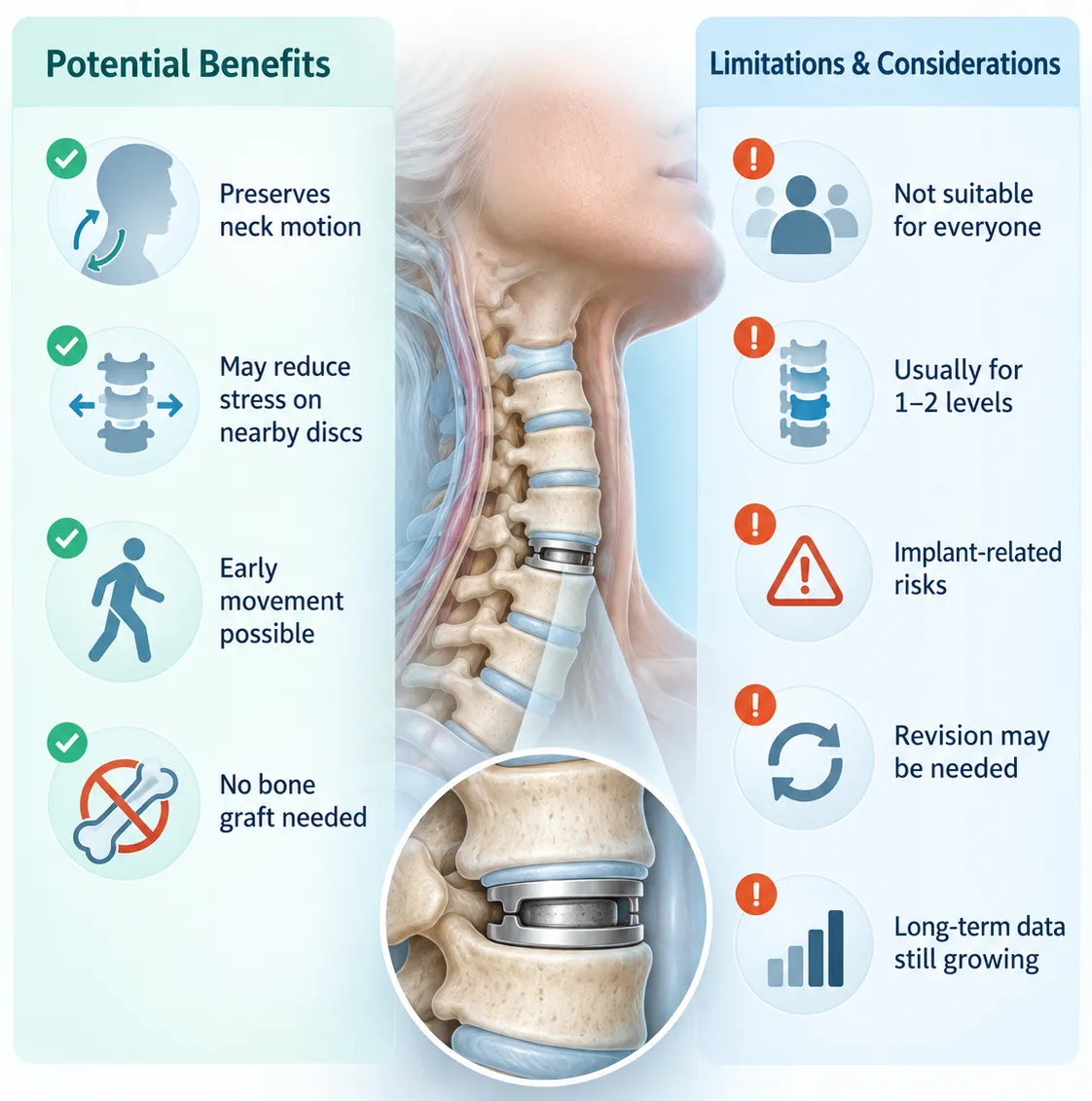
Ideal Candidate for Cervical Disc Replacement
Understanding both sides helps in choosing between disc replacement and fusion.
Living with neck pain, arm numbness, or weakness? Get a consultation and an evidence-based plan
Frequently Asked Questions
What's the difference between cervical disc replacement and ACDF?
Both procedures are performed through the front of the neck, removing the damaged disc. ACDF is when the vertebrae are joined together with a bone graft and plate; disc replacement is when an artificial disc is inserted to keep the segment flexible. There are a lot of factors to consider, such as the pattern of compression, condition of the joints, bone quality, and number of levels involved.
Can cervical disc replacement be done for all patients with neck and arm pain?
No. A lot of neck and arm pain can be treated with medicine, physiotherapy or injections. Surgery is recommended when symptoms don’t improve after medicine and when MRI reveals compression of a nerve root or spinal cord. Patients who receive disc replacement must have a stable spine and healthy joints.
The time to recovery from UBE spine surgery is about one week in hospital and between three to six months in total to feel back to normal.
When patients have cervical disc replacement surgery, how long does recovery take?
Arm pain may improve rapidly, and neck stiffness and mild pain may last several weeks. Light activity and desk work is generally returned within 1-3 weeks and full activity over 6-12 weeks as the individual recovers and the activity required.
Will my neck be able to move normally after disc replacement?
The aim of the artificial disc is to maintain motion at the treated level, and most patients have good neck motion. This range of motion will differ from each patient, depending on their pre-surgical neck condition.
Will cervical disc replacement need general anaesthetic?
Yes. Surgery is performed near the airway and spinal structures and is done safely and accurately because the procedure is performed under general anaesthesia. An assessment of suitability for surgery will be carried out by your anaesthetist.
What is the life of an artificial cervical disc?
Today’s implants are engineered for long-term durability and many patients have had them for more than 10 years without problems. How long it lasts will be determined by the patient’s activity, bone structure, and age, and the implant will be followed over time.
Is there a risk of recurrence of neck problems following cervical disc replacement?
Over time, the neck can degenerate at other levels of the spine as well, as it ages naturally. Posture, activity and physiotherapy post-surgical recommendations all aid in maintaining the result.
Disclaimer: The information shared in this content is for educational purposes and not for promotional use.